Ceefax, Oracle and the age of teletext
Last looked over: 14 October 2026 · BritCast TV team
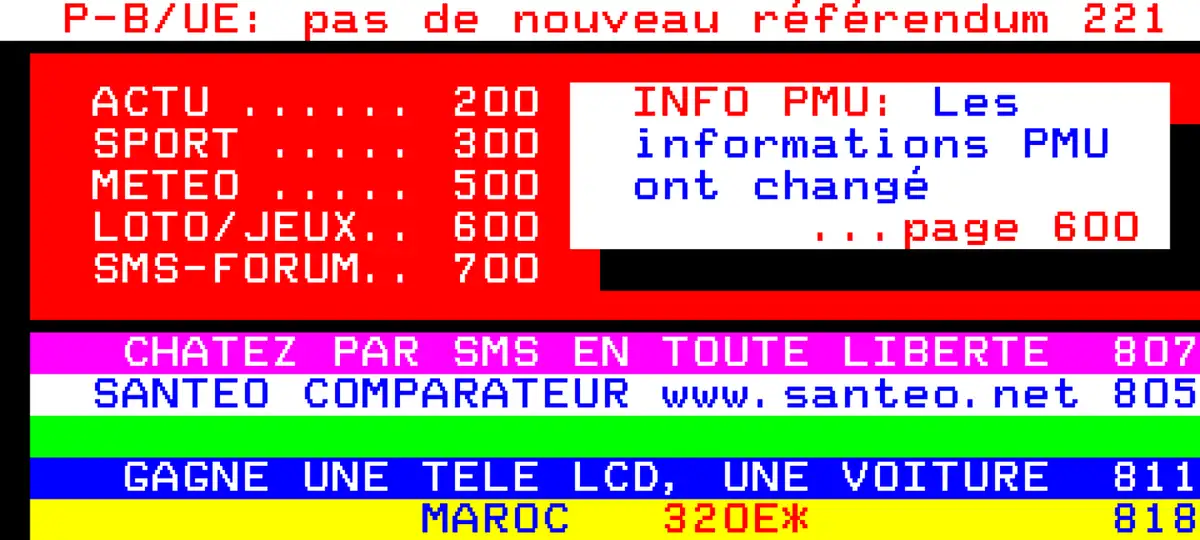

Teletext was text and blocky graphics hidden in the spare lines of the analogue TV signal. The BBC's Ceefax began in 1974 and ITV's Oracle followed; for decades they carried news, football scores, weather, holiday deals and subtitles on page 888. Ceefax closed when analogue television was switched off, the last region going in October 2012.
- Ceefax launched in 1974; its final pages went dark in October 2012.
- ITV's service was Oracle, later replaced by Teletext Ltd.
- The BBC's Red Button carried on some of the job digitally.
Text hidden in the picture
A 625-line analogue picture had spare lines at the top that never appeared on screen. Engineers realised they could carry data: a few hundred pages of text, cycled endlessly, that a teletext-equipped set could grab and display. Press TEXT on the remote, type three digits, and wait for the page counter to tick round.
Ceefax and Oracle
The BBC launched Ceefax (“see facts”) in 1974. ITV’s equivalent, Oracle, followed and ran until 1992, when it lost its licence and Teletext Ltd took over. Between them they delivered headlines, football scores updating in near real time, the weather, TV listings, share prices and cheap holidays. Subtitles on page 888 made television accessible to millions of deaf and hard-of-hearing viewers.
Switch-off
Because it lived in the analogue signal, teletext died with analogue television. The digital switchover went region by region from 2007, and Northern Ireland was last, in October 2012. Ceefax went with it.
What replaced it
The BBC’s Red Button, apps, websites and smartphones took over the job. But the look lives on: chunky letters, six bright colours and four Fastext keys. Ours is on BritCast Text, with real fixtures and listings inside.